Interventions
Ideas in color, material and form that move beyond the boundaries of individual objects and become part of the architecture itself.
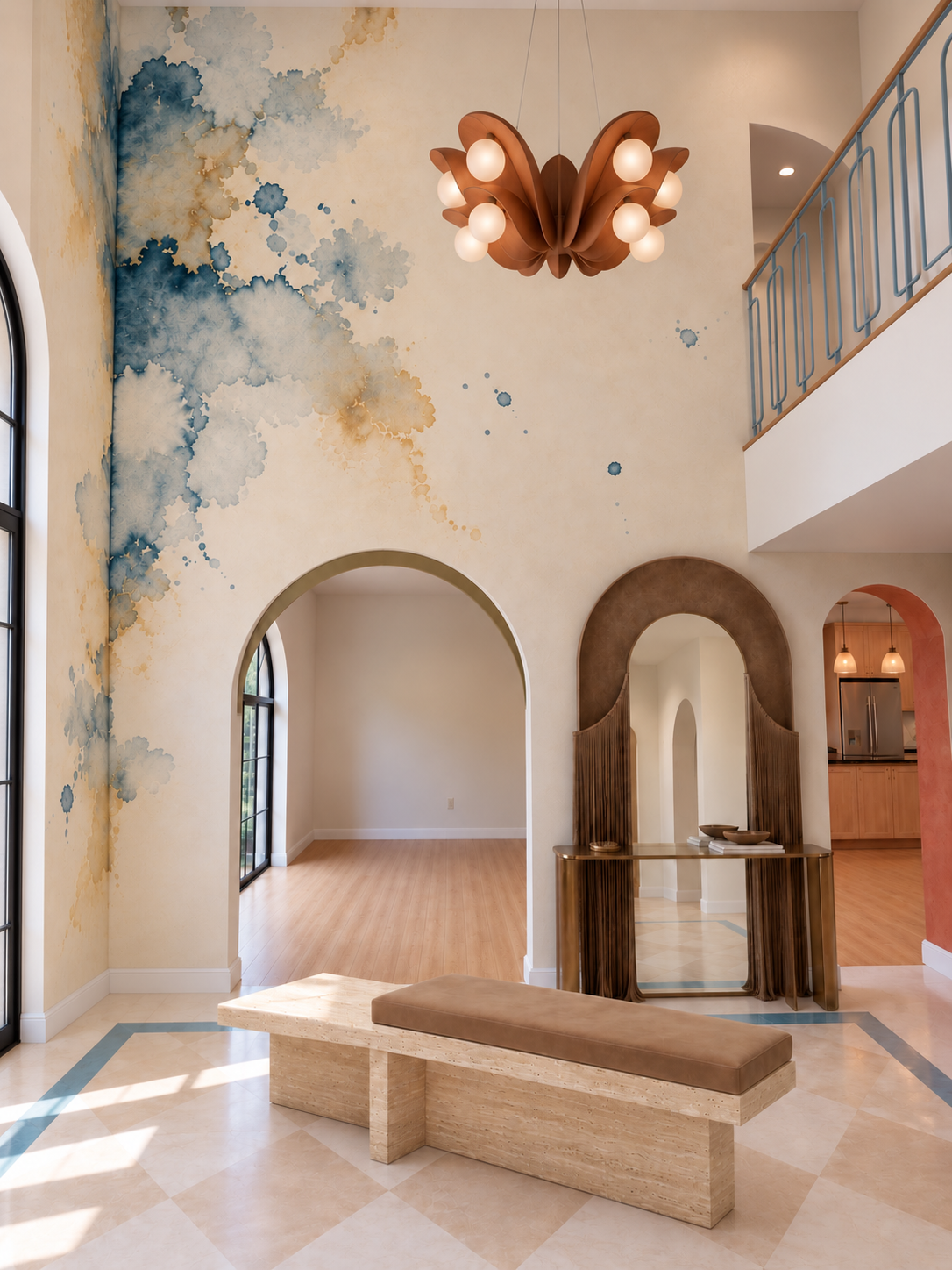
01
WATERCOLOR
Color as Architecture
A watercolor field moves across a double-height volume, shifting in density as it wraps corners and disperses across the architecture. Rather than sitting on the wall as an image, color becomes a way of shaping the experience of space.
02
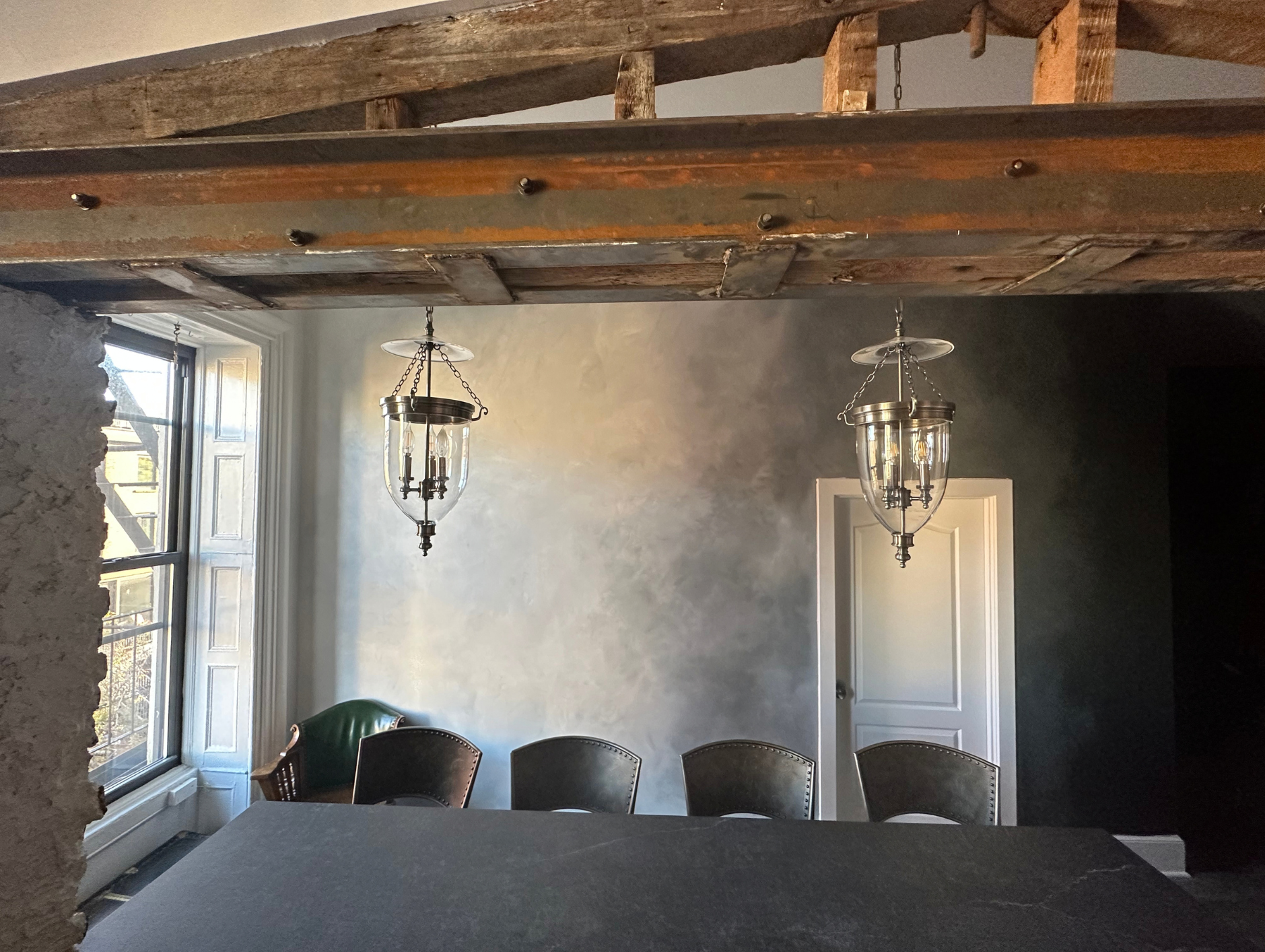
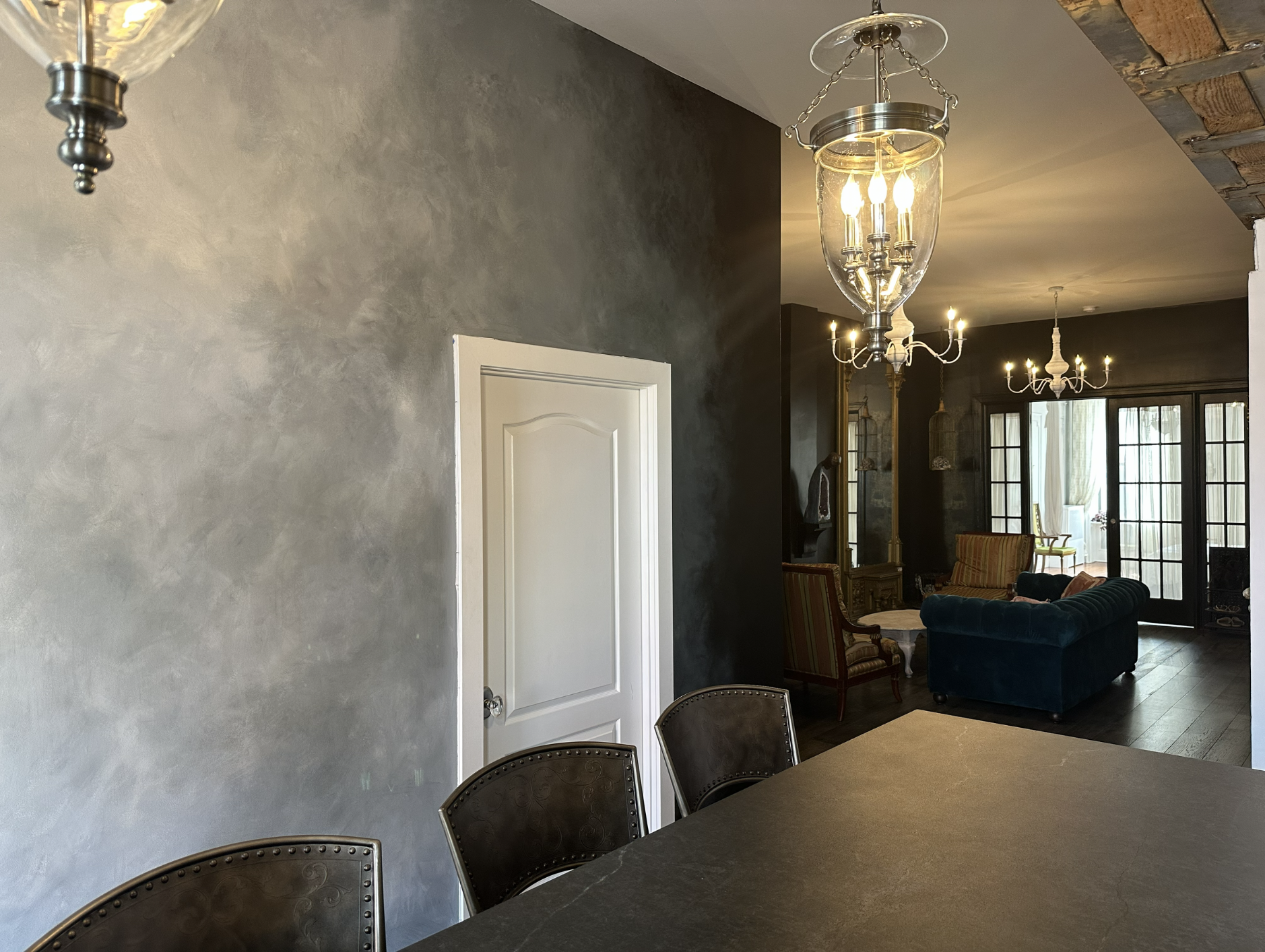
SMOKE
Surface as Atmosphere
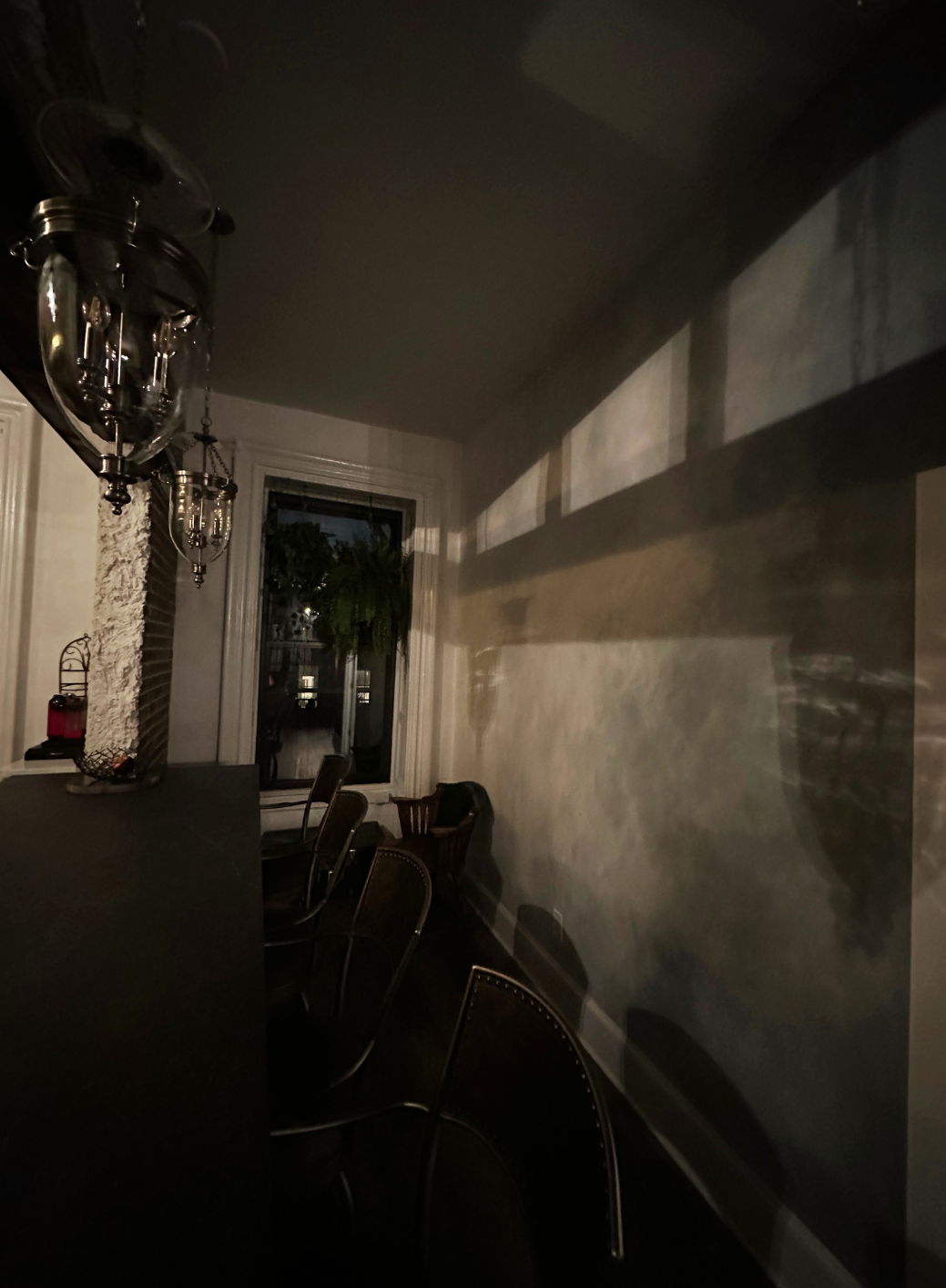
A black wall dissolves into smoke, blurring the boundary between architecture and atmosphere. The gesture continues through the window, allowing the intervention to appear as though it is escaping the room.
03
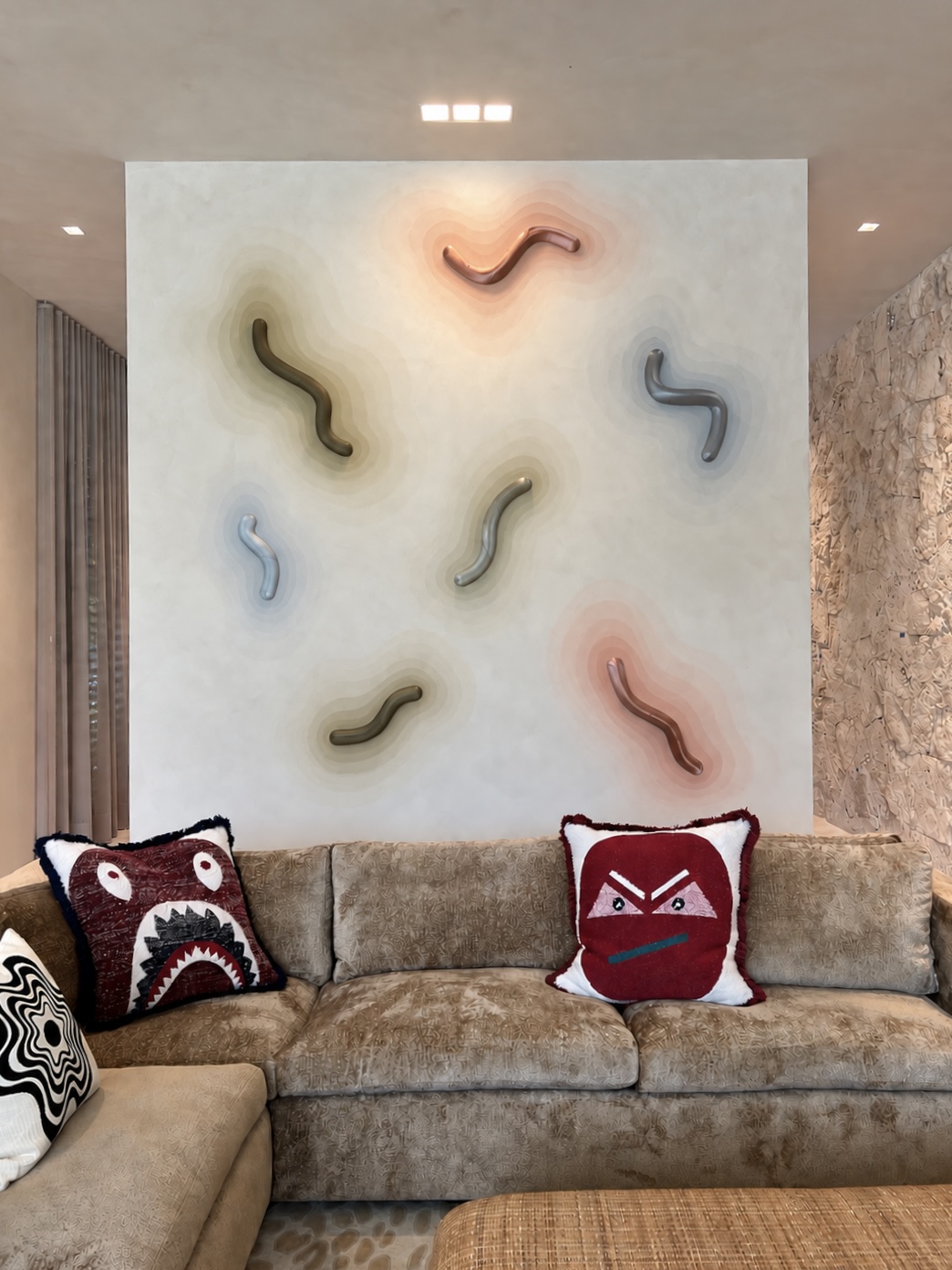
RADIANCE
Object as Environment
A sculptural wall object extends beyond its physical edge through fields of graduated color. The surrounding surface becomes part of the composition, transforming a discrete object into an atmospheric spatial experience.
04
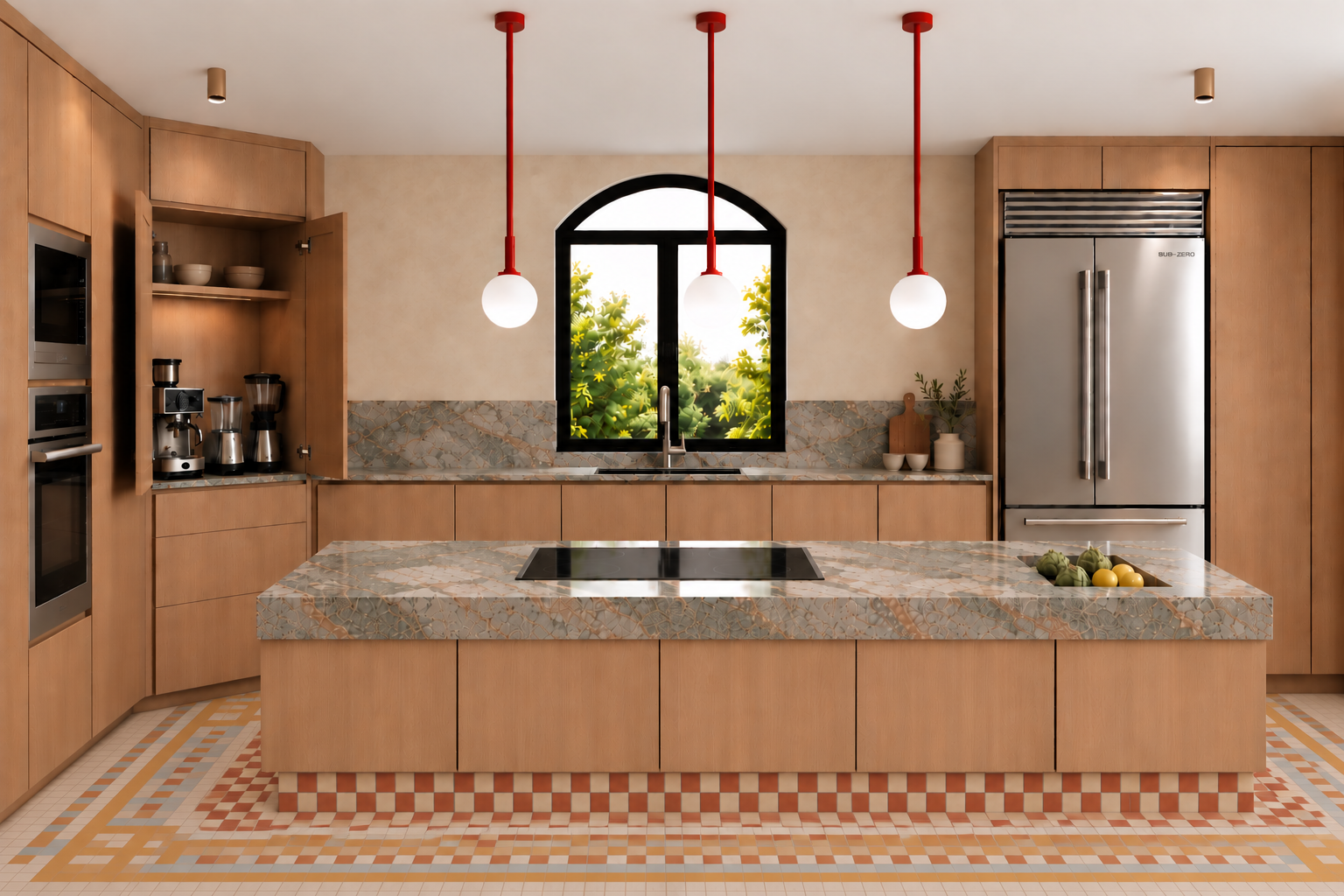
PIXELATED ARCHAEOLOGY
Pattern as Excavation
A field of mosaic tile breaks apart and reorganizes across the floor, climbing the island and dissolving the boundary between surface and object. Familiar patterns appear like fragments of something unearthed then recomposed into a new spatial language.
05
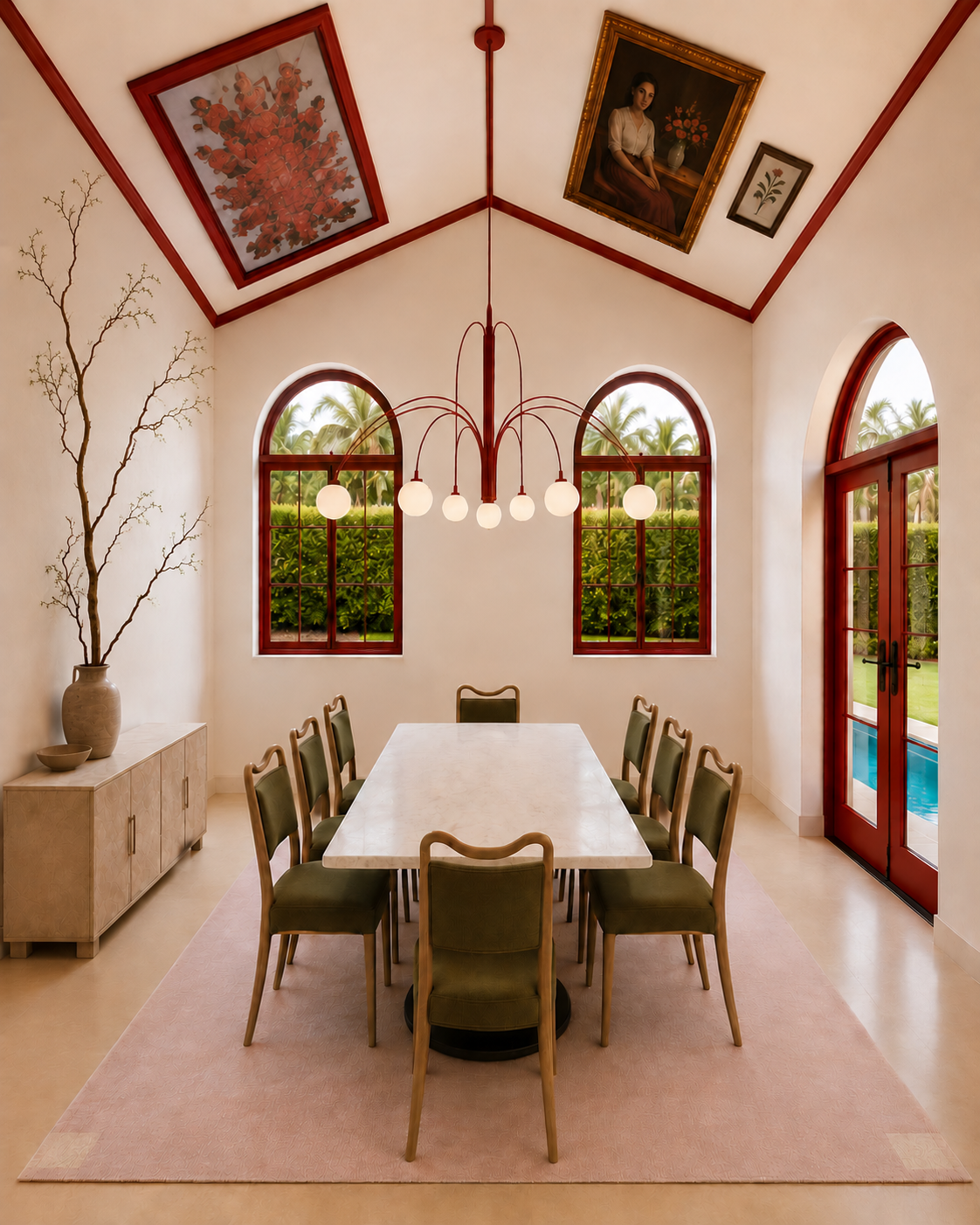
COLOR AS SPATIAL INTEGRATION
Color as a Connecting Element
Red moves from windows and doors into the ceiling trim, lighting and artwork, linking elements that would otherwise read independently. Color becomes the connective tissue of the room, turning architecture, objects and art into a single composition.
06
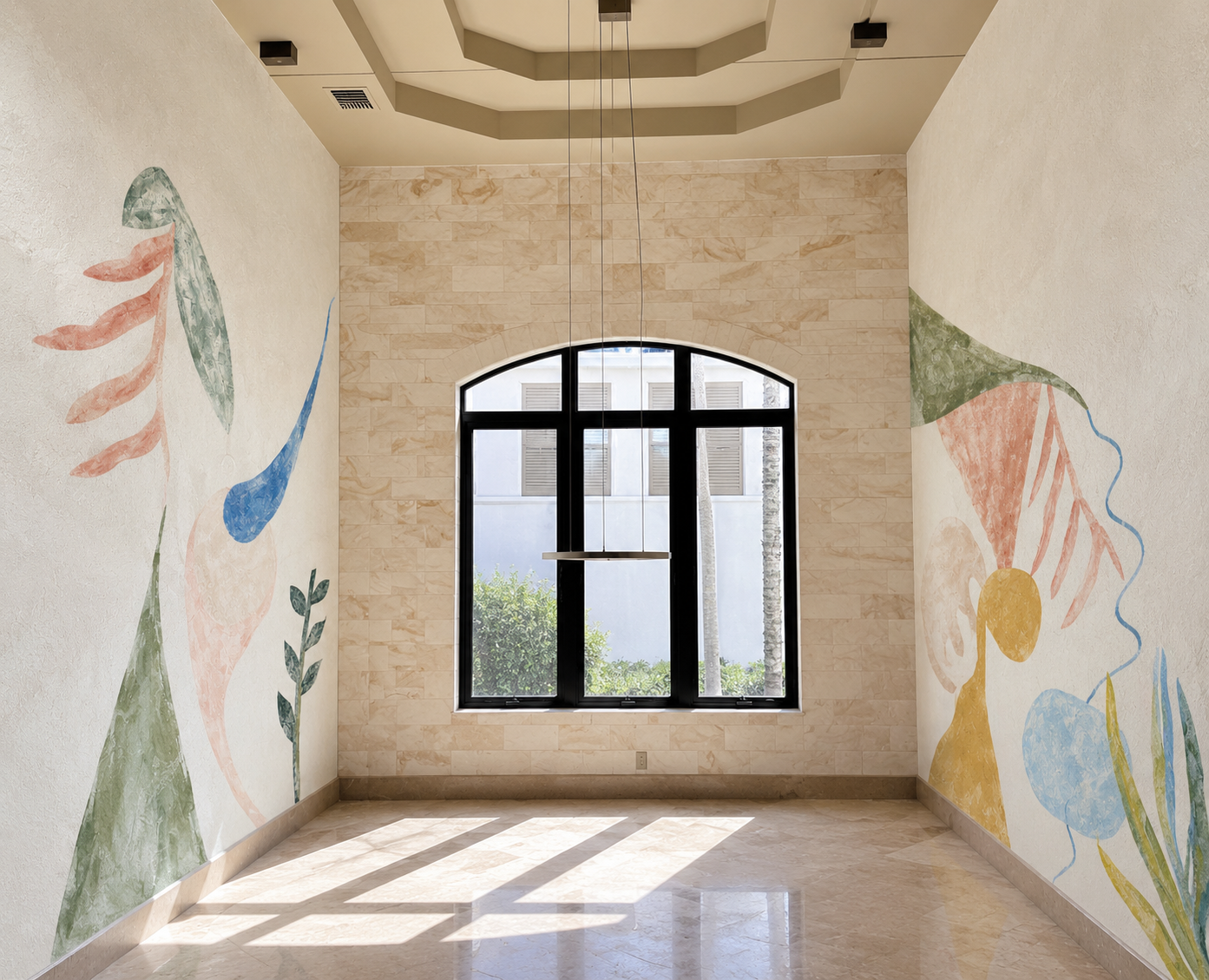
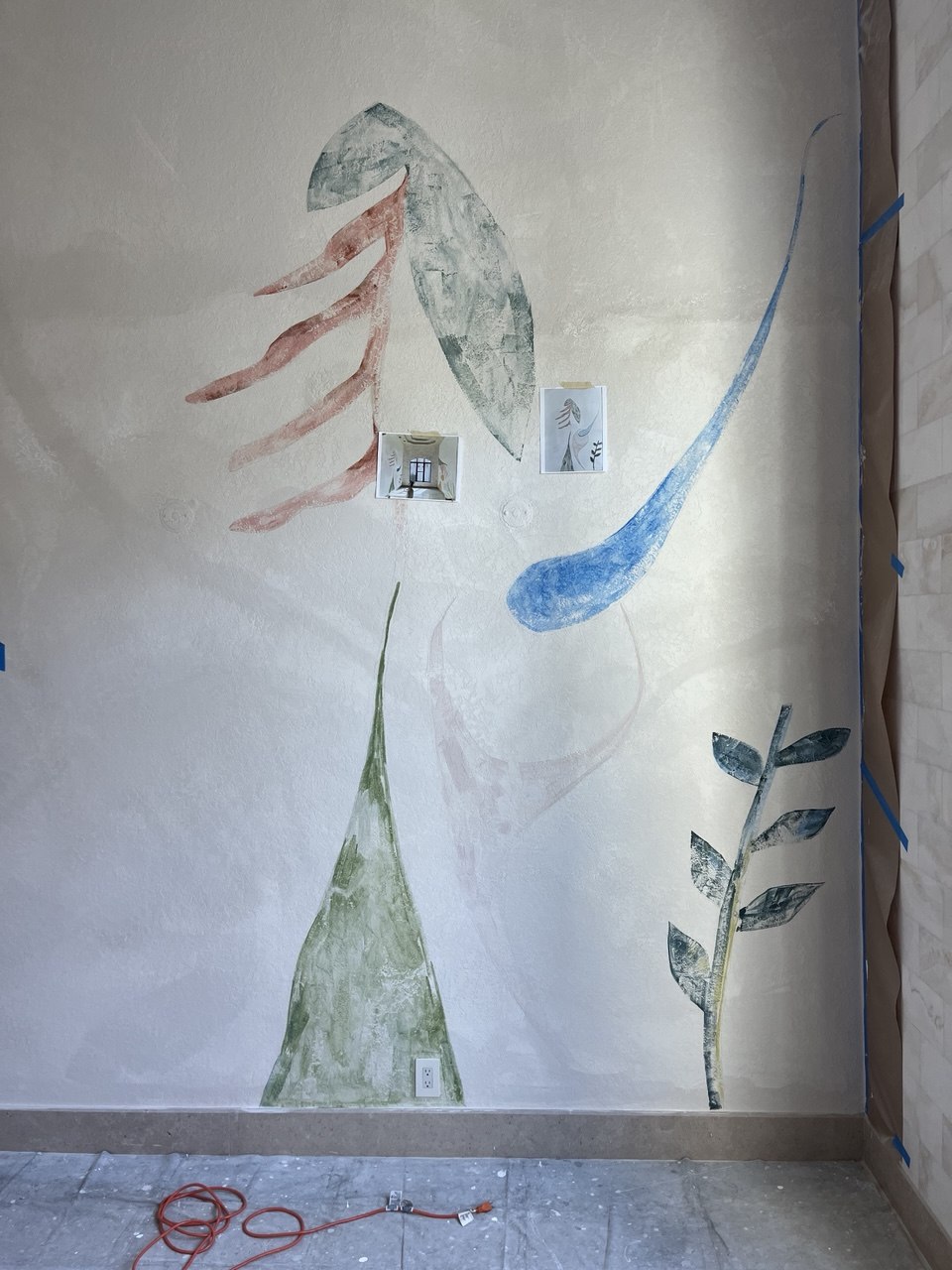
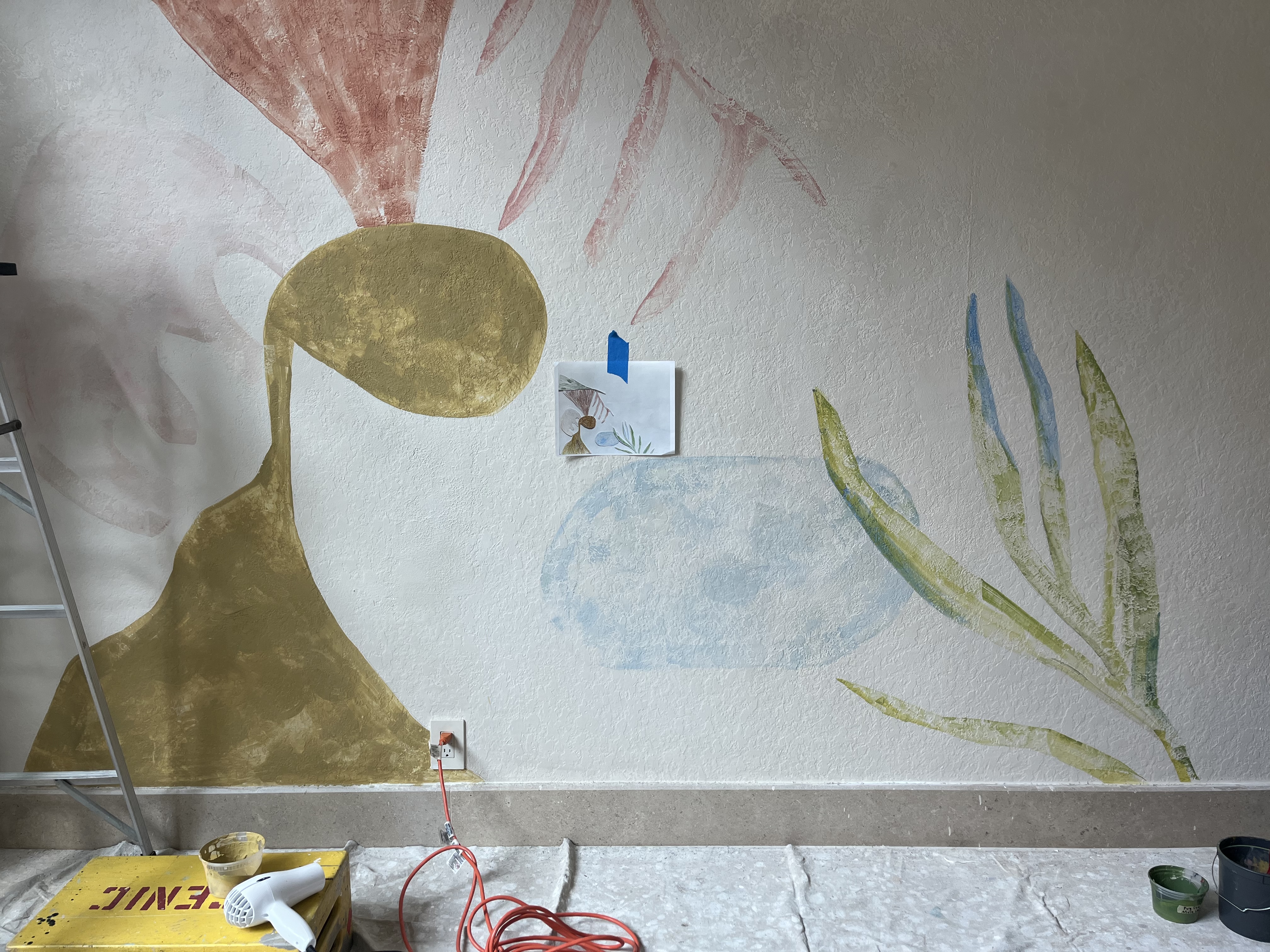
MURAL
Architecture as Canvas
Overscaled abstract forms move freely across opposing walls, using proportion, negative space and architectural boundaries as part of the composition. The room becomes the frame.